Overview
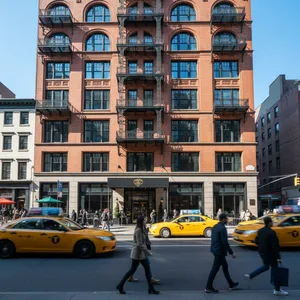
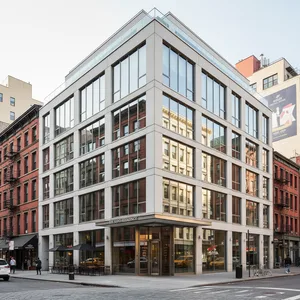
The Manhattan Institute for Policy Research is a leading American 501(c)(3) non-profit think tank located in the vibrant heart of Manhattan, influencing policy debates in SoHo and across the nation.
Founded in 1978, this independent organization is dedicated to fostering economic choice and individual responsibility.
As a research-focused institution, it does not have a traditional student body but serves as a community for scholars, journalists, and civic leaders.
Its headquarters are centrally located, providing a hub for intellectual discourse and policy development.
The Institute focuses on a wide range of domestic policy and urban affairs issues. It operates as a public policy think tank, committed to advancing opportunity, individual liberty, and the rule of law.
While it does not offer traditional year levels, its work engages postgraduate scholars, policy experts, and leaders in business and government.
The organization’s mission is to develop and disseminate new ideas that will help keep America and its great cities, from SoHo to the Upper West Side, prosperous, safe, and free.
Research Areas & Publications
The Manhattan Institute’s core work revolves around its in-depth policy research and publications. Its intellectual agenda is broad, covering key areas that shape urban life and national policy.
Fellows and scholars at the Institute produce a steady stream of research reports, articles, and op-eds that are influential in public discourse. The primary areas of focus include:
- Policing and Public Safety
- Housing and Urban Development
- Education Policy and School Choice
- Energy and Environmental Policy
- Legal and Economic Reform
- Healthcare Policy
A cornerstone of the Institute's output is City Journal, its quarterly magazine. City Journal is a prestigious publication that offers thoughtful analysis and commentary on urban policy, culture, and public affairs.
It provides a platform for the Institute’s scholars to present their findings and policy recommendations to a wide and influential audience of policymakers, journalists, and discerning readers.
Events, Fellowships & Networks
Beyond its research, the Manhattan Institute cultivates a vibrant intellectual community through events, fellowships, and networking organizations.
The Institute hosts numerous forums, debates, and conferences featuring leading thinkers and policymakers. These events provide a crucial platform for discussing pressing issues and disseminating the Institute's research findings.
A key initiative for the next generation of leaders is the Adam Smith Society. With chapters at top MBA campuses and a national network of business professionals, this program explores the moral, social, and economic benefits of capitalism.
The Society connects members with prominent leaders from business, policy, and academia to discuss the role of civil society and free enterprise in addressing contemporary challenges.
Engagement & Support
As a non-profit organization, the Manhattan Institute does not have a traditional enrolment process or tuition fees. Instead, it relies on the financial support of individuals, foundations, and corporations who believe in its mission.
Supporters can engage with the Institute's work in several ways, including making donations, subscribing to its publications, and attending its events.
The Institute provides various avenues for those interested in its work to stay informed and get involved. Its website offers access to all its publications, research, and event information.
Financial contributions are essential for funding the Institute's research and outreach, enabling its scholars to continue crafting innovative policy solutions for the challenges facing America's cities.
Facilities & Campus
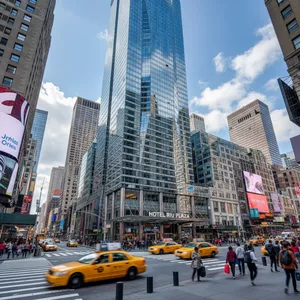
The Manhattan Institute is headquartered at 52 Vanderbilt Avenue in New York City.
This central location in Midtown Manhattan, near Grand Central Terminal, places it at the crossroads of commerce, media, and policy, providing easy access for scholars, guest speakers, and event attendees from across the city, including neighborhoods like SoHo.
The office serves as the administrative and research hub for the organization.
The facilities are designed to support a dynamic research environment, equipped with modern technology and resources for its scholars and staff.
The space includes offices, meeting rooms, and areas for hosting seminars and smaller events, fostering a collaborative atmosphere for developing and debating policy ideas.
This strategic location ensures the Institute remains an active participant in the city's ongoing public discourse.
Getting There
The Manhattan Institute's offices are located at 52 Vanderbilt Avenue, New York, NY 10017. Its proximity to Grand Central Terminal makes it exceptionally accessible via public transportation.
Numerous subway lines (4, 5, 6, 7, and S) and Metro-North Railroad services converge at Grand Central, just a short walk away.
Many city bus routes also serve the area, making it convenient for visitors from all five boroughs and the wider metropolitan region. Due to its central location, public transport is the highly recommended mode of travel.
Street parking is extremely limited, with several commercial parking garages available nearby.
What Makes It Special
The Manhattan Institute has a distinguished history of impacting public policy, rooted in its founding principles of free markets and individual liberty. Established in 1978 by Sir Antony Fisher and William J.
Casey, the Institute has developed a reputation for rigorous, independent, and bold policy research. Its motto, "Creative. Bold.
Independent.", reflects its commitment to challenging conventional wisdom and proposing innovative solutions to urban and domestic problems.
The Institute's influence can be seen in its contributions to major policy debates, from welfare reform and "broken windows" policing theory to advocating for educational choice.
It serves as a vital ideas generator, shaping discussions at the local, state, and federal levels.
Led by President Reihan Salam, the Institute continues to be a powerful voice for policies that promote economic growth, public safety, and a flourishing civil society in America.