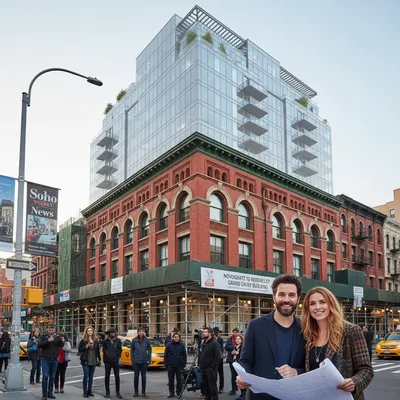
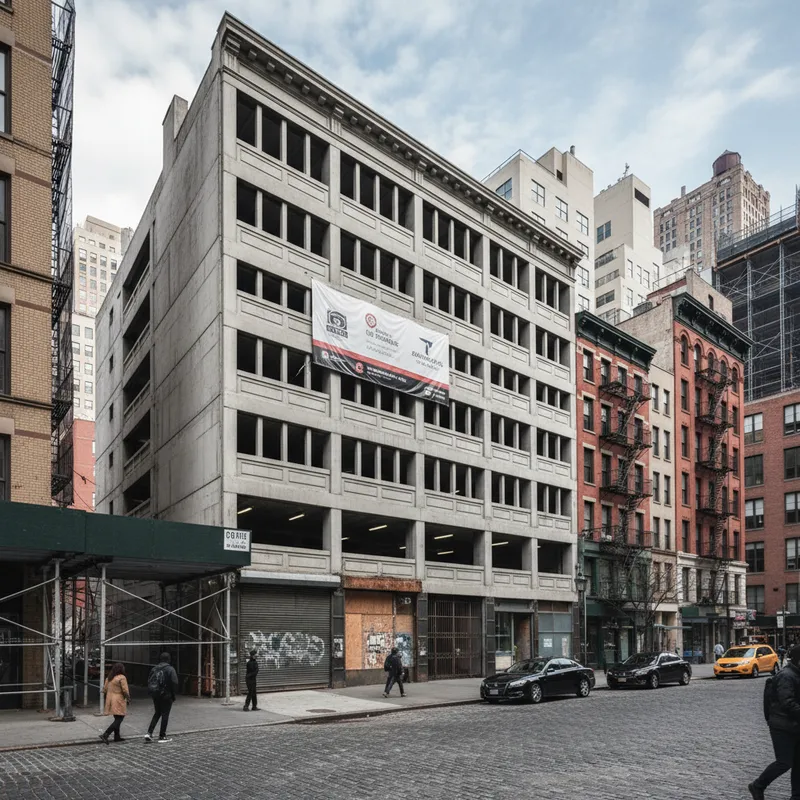
A five-story parking garage in Tribeca will be converted into apartments, marking the latest in a series of commercial-to-residential conversions aimed at addressing New York City's persistent housing demand. The project signals a significant shift in the neighborhood's real estate landscape, where the value of luxury living space is increasingly eclipsing the need for public vehicle storage.
While specifics about the developer and the exact number of units have not yet been released, the plan follows a notable pattern across the city. In recent months, similar projects have gained traction, including the conversion of a Midtown office building and a Financial District office tower that secured a $175 million loan for its apartment transformation. This trend highlights a broader, city-wide re-evaluation of commercial real estate in the face of a housing crisis and evolving post-pandemic work habits.
The conversion points to a calculated decision by developers that the long-term value of high-end residential units in a premier neighborhood like Tribeca outweighs the revenue from a 220-space parking facility. As one of New York's most affluent areas, Tribeca has a well-established reputation for spacious lofts, cobblestone streets, and celebrity residents, making it a perennial draw for wealthy buyers. Property values in the area are among the highest in the city, with multi-bedroom apartments frequently listing for well over $5 million.
For instance, current listings for homes with parking in the neighborhood underscore the premium placed on residential space. A three-bedroom apartment on Warren Street is on the market for over $5 million, while a sprawling residence on Jay Street with a private garage carries an asking price of nearly $30 million. This economic reality provides a powerful incentive for developers to pursue complex and costly conversion projects.
A growing trend of adaptive reuse
The transformation of a parking garage into apartments is part of a larger movement known as adaptive reuse, where buildings originally designed for one purpose are repurposed for another. This practice is gaining momentum across New York as a pragmatic solution to the city's housing shortage. The New York City government has actively encouraged such projects, particularly the conversion of underutilized office buildings, through initiatives like the City of Yes for Housing Opportunity proposal, which aims to update zoning regulations to facilitate more conversions.
This city-wide push is a response to fundamental market shifts. The rise of remote and hybrid work has left many older office buildings with high vacancy rates, while the demand for housing continues to climb. Converting these structures is a more sustainable alternative to demolition and new construction, preserving the architectural character of neighborhoods while creating much-needed homes.
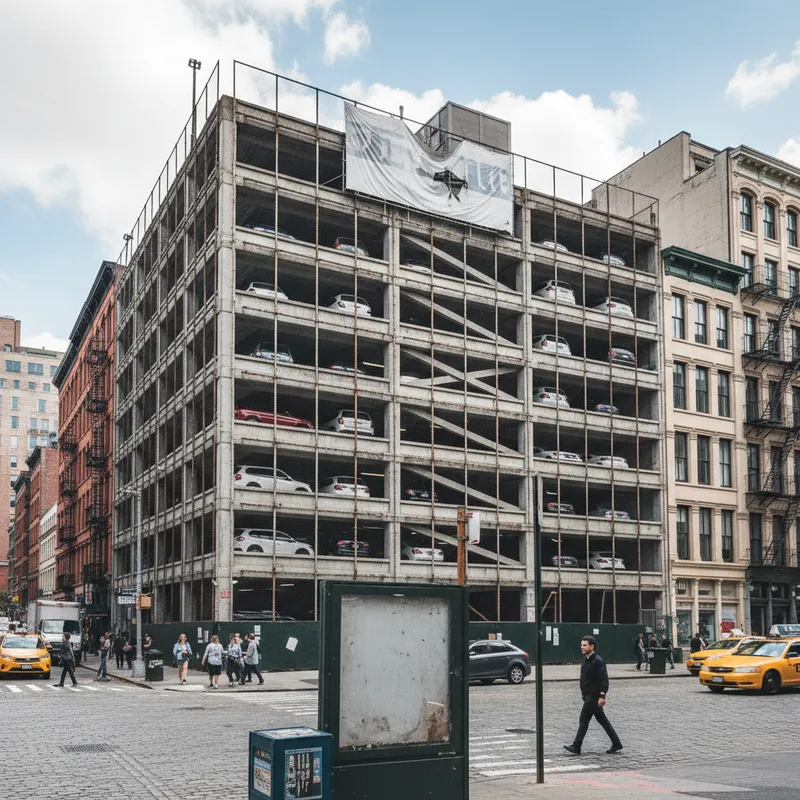
Projects like this are not without their challenges. Converting a structure designed for cars into one suitable for human habitation involves significant architectural and engineering hurdles. Issues such as plumbing, window placement, ventilation, and meeting residential building codes must be addressed. In historic districts like Tribeca, these projects also face intense scrutiny from the Landmarks Preservation Commission (LPC) and local community boards.
Navigating Tribeca's historic landscape
Any major construction in Tribeca, part of which is a designated historic district, requires a rigorous approval process. Developers must present their plans to community boards and the LPC, ensuring that any alterations, especially to the building's facade or height, are appropriate for the historic context. This often involves detailed visibility studies and mockups to show how new additions will impact public sightlines.
A similar project in the neighborhood, the 2020 plan to convert a garage at 56 North Moore Street into an office building, involved a lengthy review of a proposed two-story rooftop addition. Initial plans required revisions after community feedback and careful consideration by the LPC regarding the addition's visibility from street level. This precedent illustrates the meticulous planning and community engagement required to build in the area. Despite the bureaucratic hurdles and construction complexities, the financial allure of creating new luxury apartments in Tribeca remains a powerful driver. The neighborhood's vibrant culture, with its high-end boutiques, renowned restaurants, and proximity to SoHo's art galleries, ensures that demand for residential property stays exceptionally high. Similarly, Newmarket apartment owners face cladding cost disputes.
The future of parking in Manhattan
The removal of a 220-space garage also raises questions about the future of personal vehicle ownership in Manhattan. While parking has long been a coveted and expensive amenity, an increasing number of new luxury developments are being built with limited or no parking, reflecting a growing reliance on public transportation and ride-sharing services. For many residents, the convenience of a local cafe or subway stop outweighs the cost and hassle of owning a car in the city.
However, for those who do own vehicles, the decline in public parking options means that private, in-building garage spots become even more valuable. Many high-end listings in Tribeca and SoHo explicitly advertise on-site or private parking as a key selling point, positioning it as an essential luxury feature. The conversion of this garage suggests that developers are betting that a majority of future residents will either be car-free or willing to pay a significant premium for parking in the new building or at another nearby facility.
As New York continues to evolve, the trend of converting underused commercial properties into homes is expected to accelerate. This latest Tribeca project is a clear indicator that in the ongoing competition for space, the need for housing is increasingly defining the future of the city's built environment.