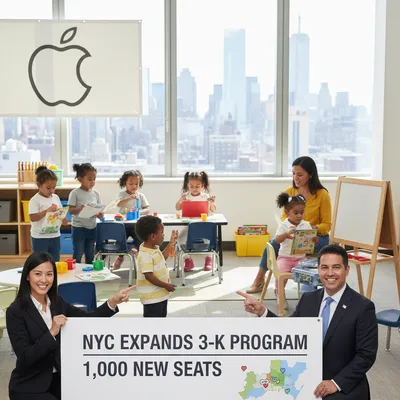
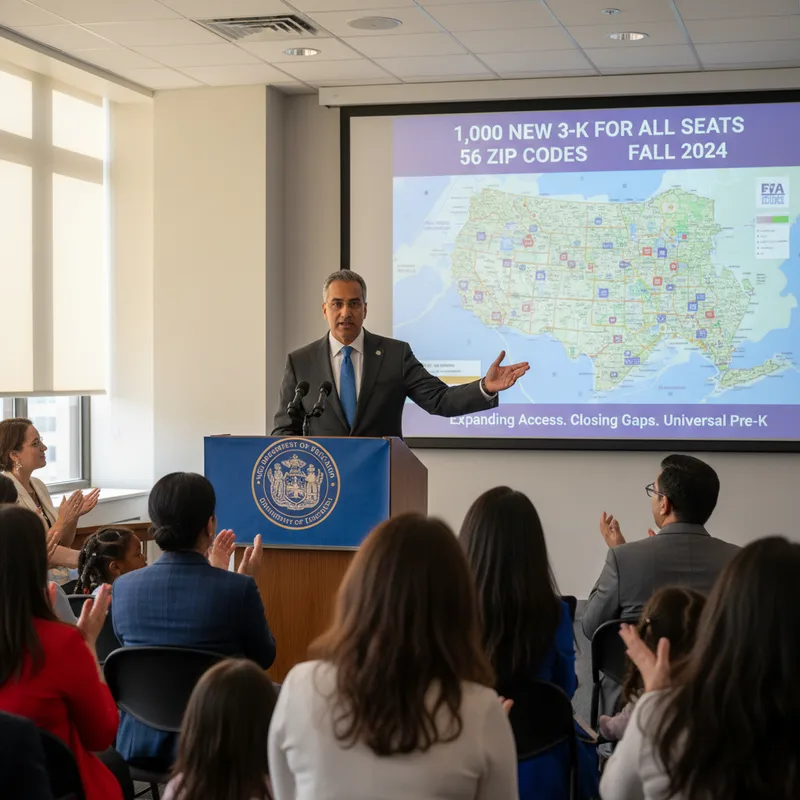
The City of New York will add more than 1,000 new 3-K seats across 56 ZIP codes this September, following an announcement by Mayor Zohran Kwame Mamdani on Tuesday. The expansion is part of a plan to make the early childhood education program universal across all five boroughs. Officials say the new seats will address geographic gaps where families previously struggled to find local placements. The New York City expands free 3-K program initiative focuses on 32 school districts. Manhattan families in 16 ZIP codes will see increased access, including areas in SoHo, Greenwich Village, and the Upper West Side. Queens will receive the largest number of new placements with 21 ZIP codes targeted, followed by Brooklyn with eight and Staten Island with six. Speaking at an event on Staten Island, Mayor Mamdani said the administration is working to fix a system that previously forced parents to choose between paying for private care or commuting long distances. For too long, families were promised universal 3-K but offered seats miles away, Mamdani said. He added that government must deliver relief from the city's ongoing affordability crisis.
Focus on high-demand districts
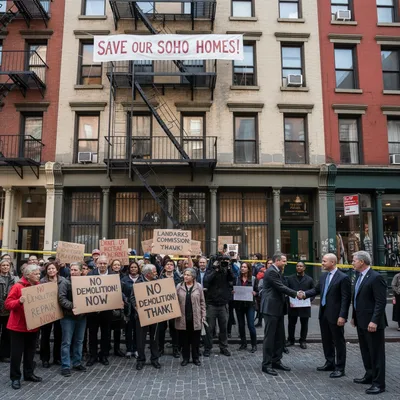
The expansion targets specific neighborhoods where demand has historically outpaced supply. In Manhattan, the rollout covers District 2, 3, and 6. This includes ZIP code 10012, covering SoHo and Greenwich Village, where SoHo loft conversions face new landmark review as the residential population continues to shift. Other Manhattan areas included are Chelsea, Hell’s Kitchen, and the Upper East Side. Governor Kathy Hochul, who joined the Mayor for the announcement, said the partnership aims to reduce the financial burden of childcare on New York families. Higher costs for early education often force parents out of the workforce. Public Schools Chancellor Kamar Samuels said the 1,000 new seats are located in areas where application data shows the highest need. Adding seats where demand is growing helps more families access high-quality early childhood education, Samuels says. In the Bronx, the expansion will reach five ZIP codes in Districts 8 and 11, including Pelham Bay and Co-op City. Staten Island’s District 31 will see new seats from Port Richmond down to Tottenville. Brooklyn's allocation includes DUMBO, Greenpoint, and Sheepshead Bay. The city selected these locations based on historical enrollment patterns and the capacity of local providers to take on more students.
Timeline for families and applications
Families who have already submitted applications for the upcoming school year do not need to restart the process. New York City Public Schools plans to notify families as new programs are confirmed and listed on the MySchools portal. Parents have until April 24, 2026, to update their existing applications to include these new locations. The move follows a Request for Information issued by the city in February to identify potential space for new classrooms. The Mamdani administration has prioritised early childhood education since taking office in January. This expansion is the second major announcement regarding childcare this year, following an earlier partnership with the state to provide free options for two-year-olds. The push for more seats comes as the city grapples with broader housing and cost-of-living issues. While some neighbourhoods have seen pushback against new developments—such as when celebrities back fight against affordable housing in some Manhattan districts—the demand for educational infrastructure remains high. Enrollment in 3-K programs is a key factor for families deciding whether to remain in the city.
Managing school resources
The New York City Department of Education is tasked with ensuring these new seats are staffed and ready for the September start. This involves coordinating with community-based organisations that provide many of the city's 3-K services. Officials expect the increased capacity will help reduce the number of families on waitlists, which have been a recurring issue in high-density districts. The logistics of the expansion rely on both public school buildings and private providers. By spreading the 1,000 seats across 56 ZIP codes, the city aims to ensure that "universal" means a seat within a reasonable distance of a child's home. Similar efforts to bolster youth services are occurring internationally, as seen where Dialog Axiata secures sponsorship for school sports to maintain engagement. Families looking for specific site locations can check the MySchools website for updates throughout March and April. The city will continue to monitor enrollment figures to determine if further seats are required before the 2026-2027 academic year begins. The final list of confirmed providers will be released once all contracts are finalised.