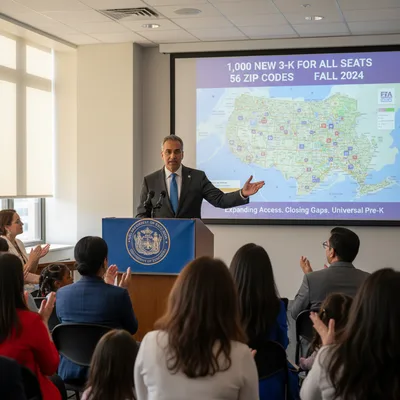
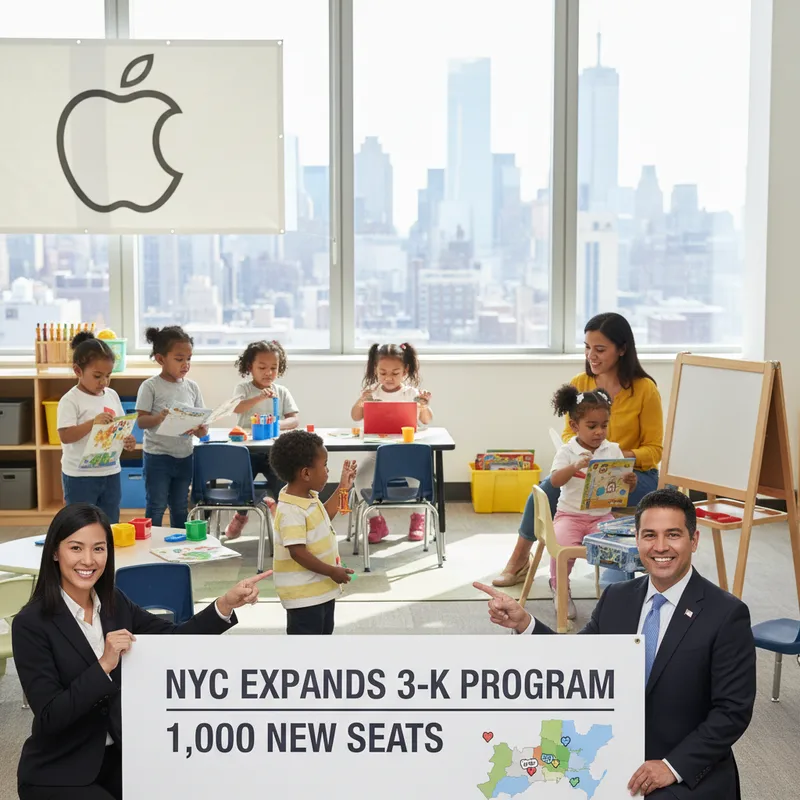
New York City will add more than 1,000 new seats to its free 3-K program across 56 zip codes this autumn. City Hall confirmed the expansion on Monday, targeting high-demand areas in all five boroughs where parents have previously struggled to secure local placements for their three-year-olds. The expansion covers 32 school districts and aims to address a long-standing gap between the promise of universal early childhood education and the available supply of classroom space. According to the city, the move includes 16 zip codes in Manhattan and 21 in Queens. The Bronx, Brooklyn, and Staten Island will also see significant increases in capacity. Mayor Zohran Mamdani is expected to formally announce the details on Tuesday. The Mayor said the expansion is a direct response to the city’s ongoing affordability crisis, which has seen some families move away from the city due to the high cost of childcare. “For too long, families were promised universal 3-K but offered seats miles away — forcing them to pay out of pocket for child care or leave the city,” Mamdani wrote in a press release. “Today we’re making a new commitment: government can deliver real relief from the affordability crisis.”
Impact on lower manhattan and SoHo
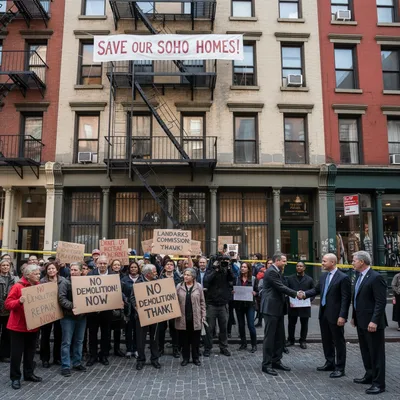
In Manhattan, the expansion will heavily affect neighborhoods where real estate pressures often squeeze out essential services. Zip codes 10012 and 10003, covering SoHo, NoHo, and the East Village, are included in the roll-out. These areas have seen a shift in demographic needs as more families attempt to remain in the city centre. The pressure on local infrastructure is a recurring theme in these neighborhoods. While some residents have focused on the fight against affordable housing projects, others have argued that without supporting services like 3-K, the area risks becoming inaccessible to middle-class families. The 10012 zip code, which includes a mix of historic lofts and high-end retail, will now see more options for full-day education. This arrives as SoHo loft conversions undergo new landmark reviews, potentially bringing more residential units and young children into the district.
Targeted zip codes across the boroughs
The distribution of the 1,000 new seats follows a specific geographic map released by the city. Queens will receive the largest number of new placements across 21 zip codes, including Corona, Jackson Heights, and Forest Hills. This borough has historically faced some of the tightest competition for early education spots. In Brooklyn, the expansion covers districts 13, 14, 15, 20, and 21. Specific neighborhoods include Greenpoint, Park Slope, and DUMBO. Parents in these areas have frequently reported being offered seats in distant school districts, making the free program logistically impossible for working residents. Staten Island’s District 31 will also benefit, with six zip codes ranging from Port Richmond to Tottenville receiving additional capacity. The Bronx will see increases in Districts 8 and 11, covering areas such as Pelham Bay and Co-Op City.
Addressing the affordability crisis
The 3-K program is designed to provide free, full-day education, which City Hall views as a critical economic tool. For many New York families, the cost of private daycare for a three-year-old can exceed monthly rent or mortgage payments. The Mayor’s office stated that making the program "truly universal" is a priority for the current administration. Business leaders often view childcare as a key factor in employee retention. Similar trends have been noted in other markets, such as in San Diego where entrepreneurs are looking at social value beyond simple transactions. In New York, the business value lies in maintaining a stable workforce that isn't forced to migrate to the suburbs. The Department of Education's official website provides a portal for families to check their eligibility and locate nearby providers. This expansion is timed for the autumn intake, allowing parents to adjust their applications before the final deadlines for the upcoming school year. The city has not yet provided a breakdown of the exact number of seats per specific zip code. However, the focus appears to be on neighborhoods identified as "childcare deserts," where the number of children significantly outweighs the available licensed providers. Formal applications for the new seats will follow the standard city enrollment process. Parents already in the system will likely receive updates regarding new options in their immediate vicinity. The Mayor will provide further details on the funding and individual school assignments during his Tuesday address.