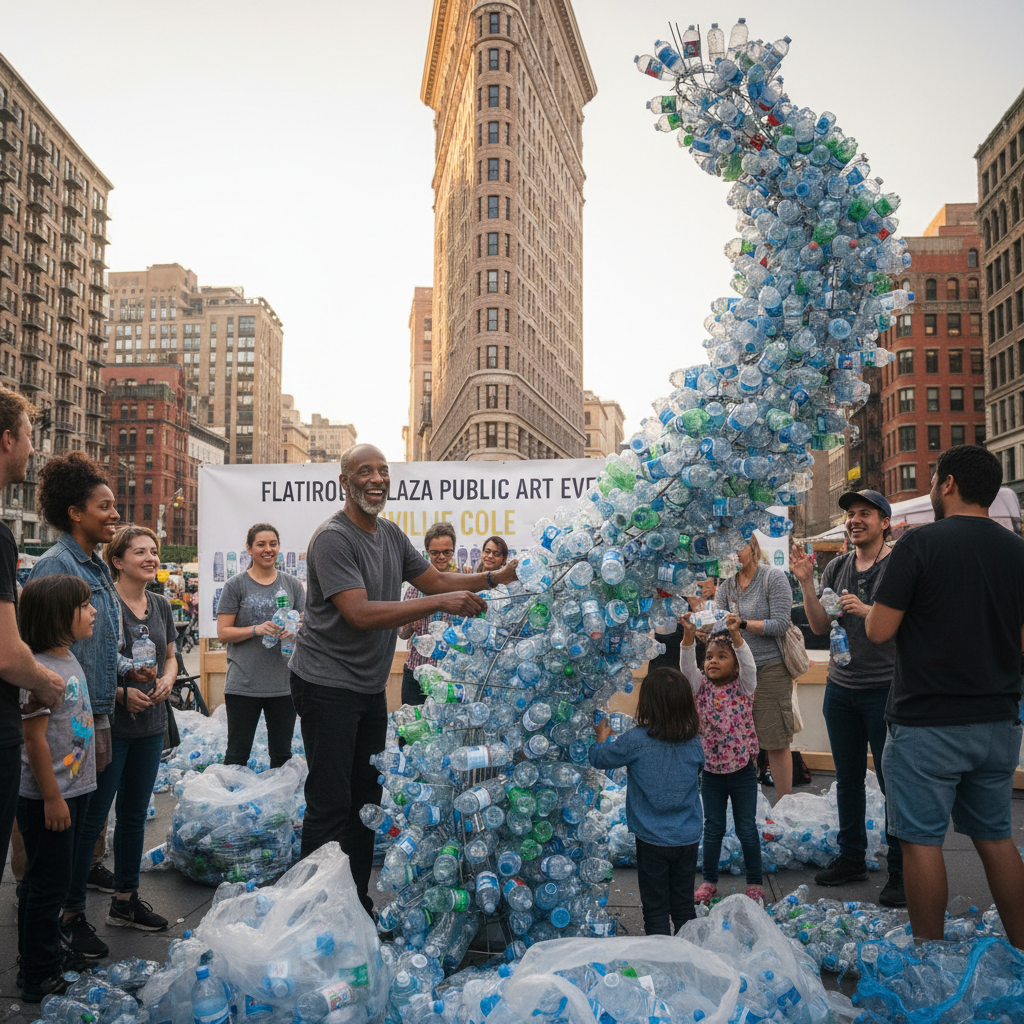
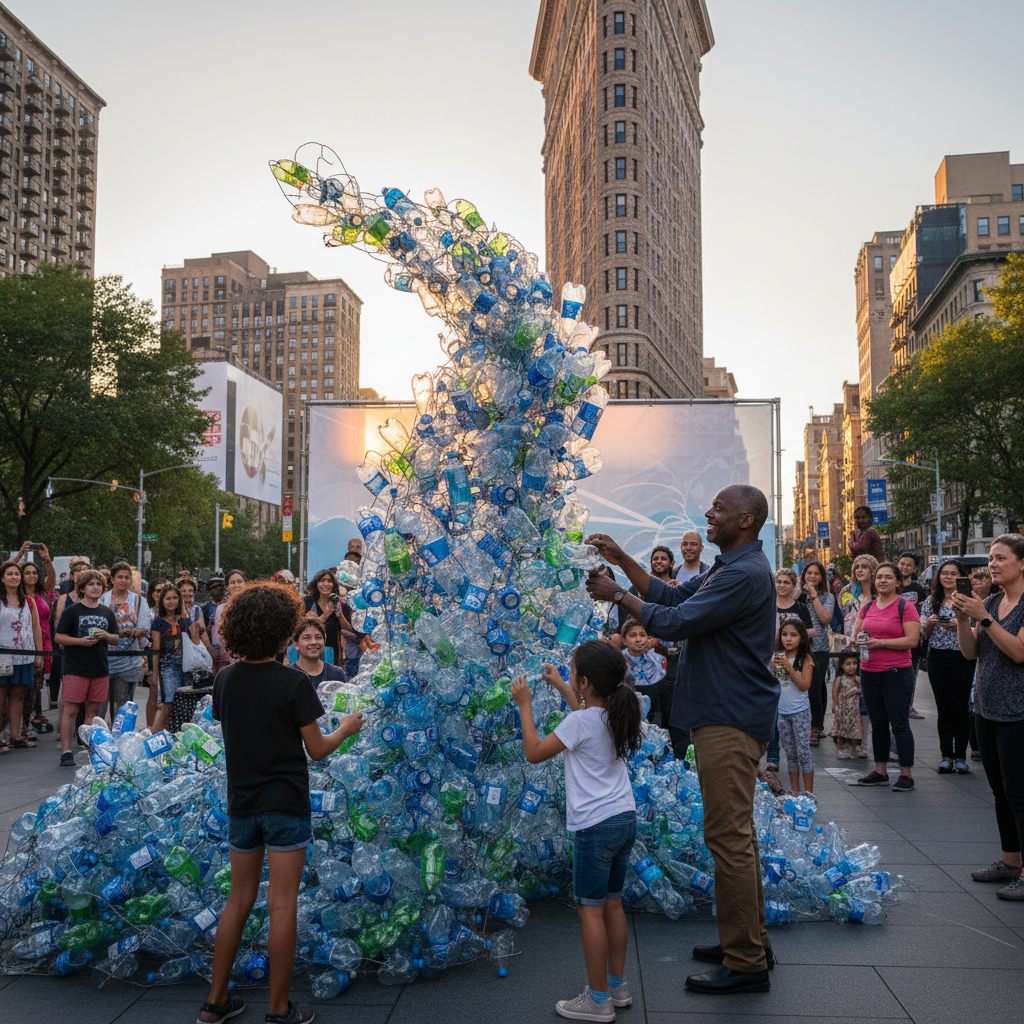
Manhattan’s Flatiron Public Plaza is set to transform into a live art studio this Friday, as renowned artist Willie Cole builds a large-scale sculpture using 2,500 single-use plastic bottles. The daylong event, running from 9 a.m. to 5 p.m. at Broadway and 23rd Street, invites the public to become part of the creative process, turning discarded waste into a powerful statement on consumption and environmental responsibility.
The project, a partnership with sustainable brand Rothy's, encourages New Yorkers to bring their own empty plastic bottles to contribute to the installation. In a direct exchange that reinforces the project's message, participants who add a bottle to the sculpture will receive a new, reusable one to take home. This interactive element aims to move beyond passive observation, making each visitor a collaborator in the artwork's creation and its underlying message.
The installation serves as a stark visualization of the scale of plastic waste. While 2,500 bottles will form a substantial sculpture over the course of eight hours, it represents a tragically small fraction of national consumption. With Americans discarding an estimated 60 million plastic bottles every day, the materials for the entire artwork equate to less than four seconds of the country's daily plastic bottle waste. This sobering statistic highlights the immense challenge of plastic pollution and the urgent need for systemic change.
The artist behind the vision
Willie Cole has built a celebrated career by transforming common, everyday objects into profound works of art that challenge viewers to reconsider their relationship with consumer goods. His sculptures, often constructed from items like shoes, irons, and now plastic bottles, are featured in the permanent collections of some of the nation’s most prestigious institutions, including the Metropolitan Museum of Art, the Museum of Modern Art, and the Whitney Museum of American Art.
Cole’s work frequently explores themes of identity, consumerism, and the environment. By moving this installation from a traditional gallery to a public plaza, he makes his commentary accessible to a wider audience. The project democratizes the artistic experience, relying on real-time public contributions to supply the materials. The final piece will not only be a product of Cole's vision but also a tangible representation of the collective footprint of the New Yorkers who stop to participate.
This style of public-facing, participatory art has deep roots in a city that prides itself on its vibrant street culture and creative energy. While SoHo was once the epicenter for budding artists, that spirit now permeates public spaces across all boroughs. Venues like Chelsea Market and Grand Bazaar NYC have become popular destinations for discovering local artists, demonstrating a continued public appetite for art that is integrated into the fabric of daily life.
A partnership with a purpose
The collaboration with Rothy's adds another layer to the project's message. The brand has built its business model around sustainability, repurposing over 225 million plastic bottles into shoes, bags, and accessories. For Rothy's, using recycled materials is a core tenet, not an afterthought, making the partnership with Cole a natural fit.
To further encourage a shift away from single-use plastics, a hydration station will be available on-site throughout the day for visitors to refill their reusable bottles. The not-so-subtle message is clear: the best way to combat plastic waste is to reduce its creation in the first place. The event aims to be both an artistic happening and an educational experience, prompting conversations about personal habits and corporate responsibility. Such brand-artist collaborations are becoming increasingly common, leveraging cultural influence to amplify social causes. These partnerships can provide artists with a larger platform and resources, while allowing brands to engage with consumers on a more meaningful level than traditional advertising permits. This event serves as a model for how commerce and art can intersect to foster positive social change, an evolution from the purely commercial pop-ups that often dot the city's landscape. For instance, a major sculpture trail in Esperance is also bringing new cultural experiences to the public following a significant grant.
Art as a catalyst for community dialogue
Public art installations have the unique ability to spark dialogue and foster a sense of shared community. Unlike a museum, where visitors often experience art in quiet contemplation, a live build in a bustling public square like Flatiron Plaza creates a dynamic, social atmosphere. The event is a reminder that art is not just a final product to be admired but a process that can bring people together.
The installation's theme dovetails with wider municipal efforts to manage waste. As the city grapples with its environmental impact, initiatives like the recently announced plan to replace thousands of parking spots with larger trash containers show a growing political and public will to address these issues head-on. Cole's sculpture acts as a cultural touchpoint for these larger conversations, using aesthetics to make an overwhelming problem feel more immediate and personal.
Events like this one and the recent FIFA Fan Festival in Boston demonstrate the power of utilizing public plazas to create major economic and cultural moments. They transform transactional urban spaces into venues for collective experience and reflection.
By the end of the day on Friday, the completed sculpture will stand as a testament to both the environmental challenge it represents and the community that helped build it. The free event offers New Yorkers a unique opportunity to contribute to a work of art that is as much about the process as it is about the final form, leaving a lasting impression long after the bottles are cleared away.