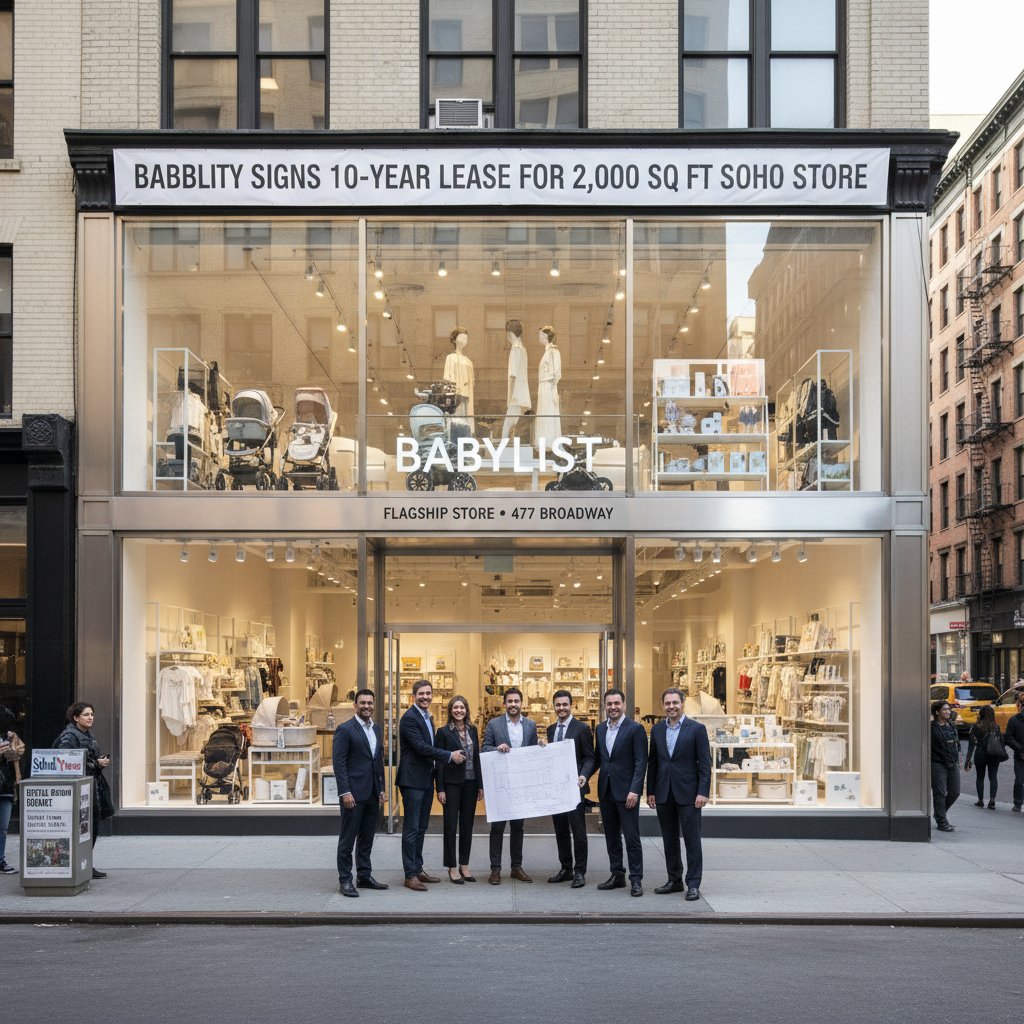
Online baby registry and retail giant Babylist will make its New York City debut with a massive brick-and-mortar flagship store in SoHo, a move that signals strong confidence in the future of physical retail in one of the city’s most iconic shopping districts. The company has signed a 10-year lease for a 20,000-square-foot space at 477 Broadway, with a planned opening for late summer.
The new store will span two full levels, with 10,000 square feet on both the ground floor and the lower level. This significant footprint will give the digitally native brand a powerful physical presence, allowing expectant parents and gift-givers to experience and test products in a way that an online storefront cannot replicate. The lease is a major commitment from Babylist, suggesting a long-term strategy centered on experiential retail as a cornerstone of its brand.
The deal was negotiated by several key players in the city’s commercial real estate scene. The landlord, an entity listed as 477 Realty LLC, was represented by Paul Popkin, Morris Dweck, and Annie Squier of Lee & Associates. Babylist was represented in the negotiations by Lydia Bell and Cole Stapleton of Tungsten Property.
A vote of confidence in physical retail
Babylist’s move comes amid a shifting retail landscape, where the line between e-commerce and physical stores is increasingly blurring. The "clicks-to-bricks" strategy, once a novelty, has become a proven model for online brands seeking to expand their reach, build brand loyalty, and offer customers a richer shopping experience. For a category like baby products, where big-ticket items such as strollers, car seats, and furniture are major investments, the ability to see, touch, and test items in person is a significant advantage. The 10-year term of the lease is a particularly strong statement. It demonstrates a belief in the enduring appeal of SoHo and the importance of having a flagship presence in a globally recognized retail hub. This move bucks the narrative of a retail decline, suggesting that for the right brands with the right strategy, physical stores remain a vital and profitable part of the business model. The investment stands in contrast to the struggles seen in other commercial centers, such as downtown Los Angeles, highlighting the unique resilience of prime Manhattan retail corridors. In a different sector, the Federal government announced support for the sport-tech sector, demonstrating varied economic developments across regions.
This decision aligns with broader trends in New York City's retail market. While the city has faced challenges with retail vacancies in recent years, prime locations continue to attract top-tier tenants. A recent analysis of the city’s storefronts by the New York City Comptroller indicates that while vacancy rates remain a concern in some neighborhoods, high-traffic corridors with strong demographics are recovering well. Babylist’s lease at 477 Broadway is a clear example of this trend in action.
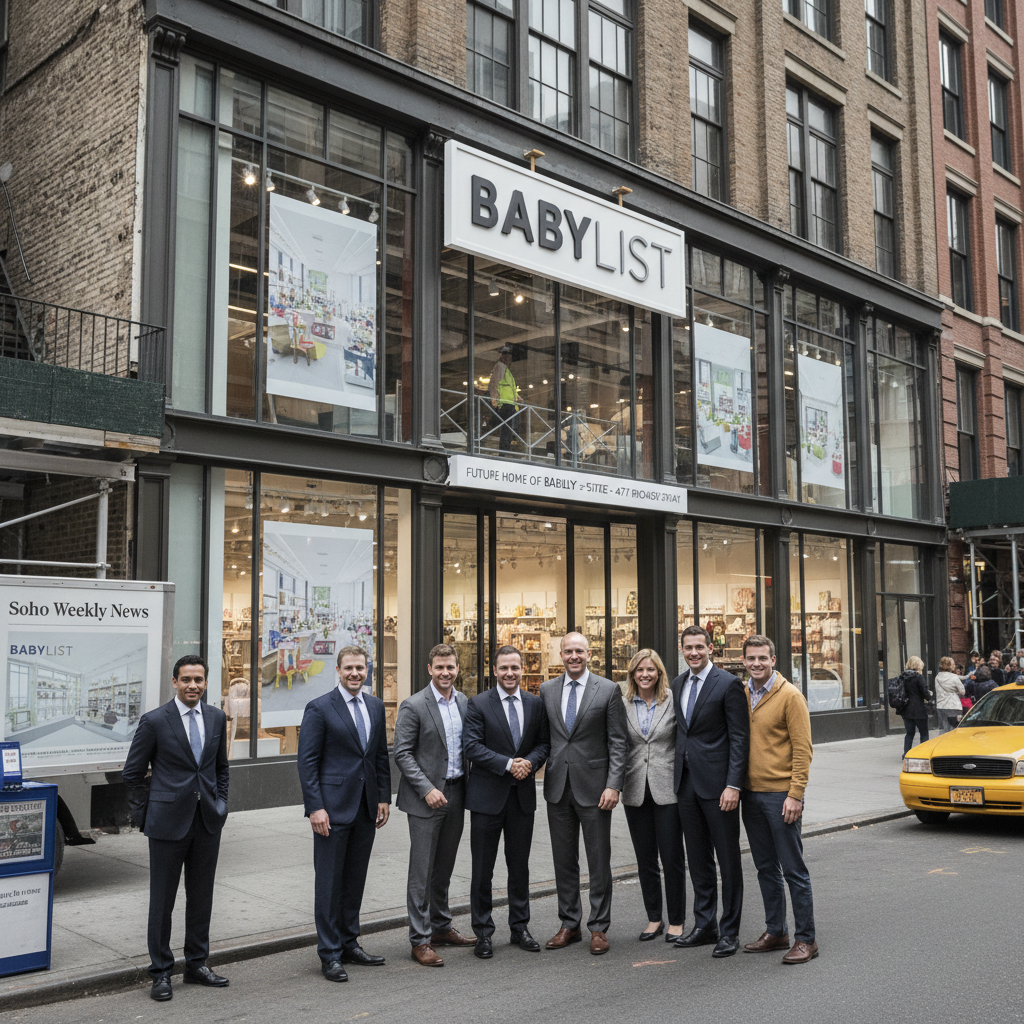
More than just a store
The new flagship is expected to be far more than a simple retail space. Given Babylist’s reputation as a comprehensive resource for new and expecting parents, the store will likely serve as an immersive showroom and community hub. The expansive, two-level layout provides ample room for interactive displays, product demonstrations, and perhaps even classes or workshops for new parents. Customers will be able to compare different stroller models, practice installing a car seat, or design a nursery with furniture and decor all in one place.
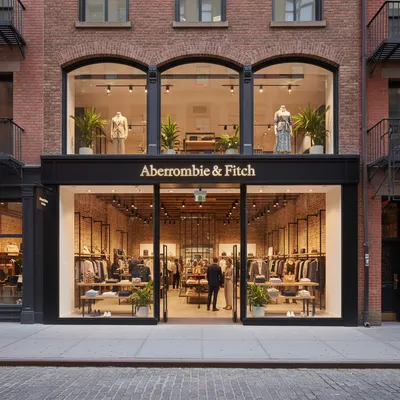
This new location places Babylist among the world’s most famous brands in SoHo, a neighborhood renowned for its cast-iron architecture, cobblestone streets, and high-end boutiques. While long known for its fashion and luxury goods, the arrival of a major baby-focused retailer reflects the evolving nature of the district. It acknowledges that SoHo is not just a destination for tourists and fashionistas, but also a vibrant neighborhood for the many families who call Lower Manhattan home. The area has seen a continuous evolution, with other major brands like Abercrombie & Fitch recently opening updated concept stores to attract modern shoppers.
The store will also add to the neighborhood's diverse amenities, giving local residents and visitors another reason to spend time in the area. After visiting the Babylist store, families may choose to dine at one of the neighborhood's many acclaimed restaurants, which are detailed in SoHo Weekly News’ ultimate restaurant guide.
The future of shopping in SoHo
The decision to open a physical store of this magnitude is a strategic one, aiming to capture the entire ecosystem of parenting. By providing a trusted voice, curated products, and now a physical space, Babylist is positioning itself as an indispensable resource. The store will not only serve the dense population of New York City and the surrounding suburbs but will also become a destination for tourists and visitors, further cementing the brand's national presence.
As a neighborhood, SoHo’s identity is intrinsically linked to its retail, and the arrival of Babylist is a significant development. It addresses a real need for families in the city and diversifies the local retail mix. The move could also influence other residential policy discussions, touching on topics like housing costs and community development as more families choose to live in central Manhattan.
The opening in late summer will be a closely watched event in the retail industry. The success of the Babylist flagship could provide a new blueprint for how online brands can successfully transition to physical retail, blending content, community, and commerce in a single, dynamic space. For now, its impending arrival marks a new and exciting chapter for both the brand and the SoHo retail landscape.