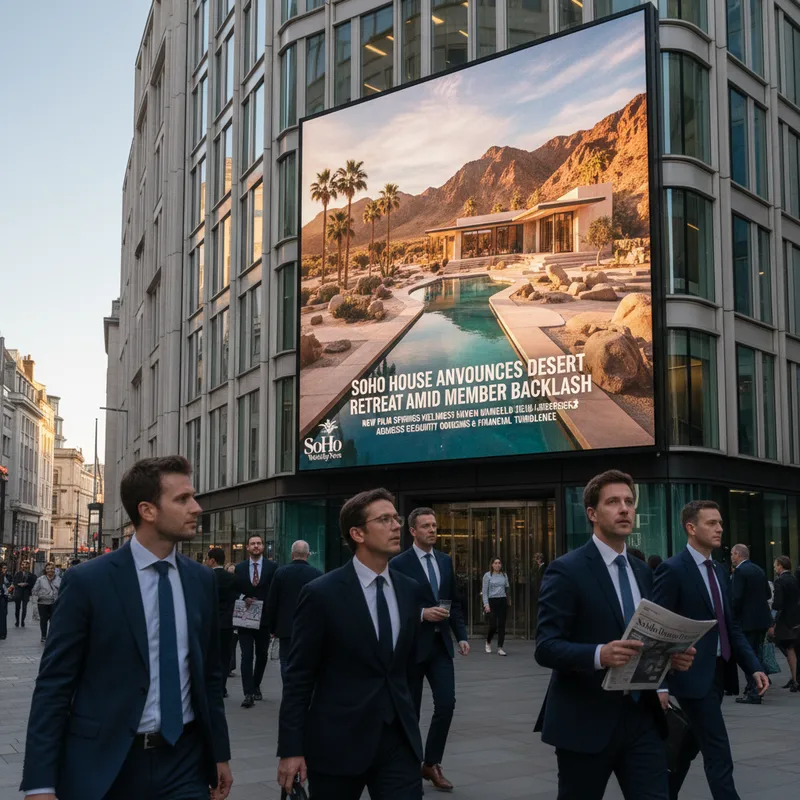
Soho House is betting on a desert oasis to revive its fading mystique. The global members-only club has announced plans for Soho Desert House Palm Springs, a sprawling seven-acre wellness retreat in California’s Coachella Valley, slated to open in 2027.
The ambitious project, set against the backdrop of the San Jacinto Mountains, will feature 17 guest bedrooms, a massive 185-foot swimming pool, and a signature Soho Health Club. The development will reimagine a 1920s estate originally built as an artists’ colony, offering modern wellness treatments like hyperbaric oxygen therapy and cold plunges. On the surface, it’s a picture-perfect expansion, tailor-made for the influencer set that frequents the region.
However, this glossy announcement comes as the brand grapples with a deepening identity crisis. Once the epitome of creative-class cool, Soho House is now facing widespread member complaints about overcrowding, declining service standards, and a general loss of the exclusivity that defined it for decades. The Palm Springs project follows an abrupt cancellation of a previous desert location in 2023 and is part of a larger global expansion that includes new Houses in Tokyo, Los Cabos, and another in New York.
A crisis of cool
Founded in 1995 by Nick Jones on London's Greek Street, Soho House cultivated an image as a private haven for people in creative industries. Its growth was deliberate, and membership was a coveted status symbol. The brand expanded globally, opening iconic locations like its New York City house in the Meatpacking District, which quickly became a hub for the city’s artistic and media elite. But that success may have sown the seeds of its current problems.
With nearly 50 houses worldwide and a membership base that has swelled to a reported 200,000 people, the very definition of “exclusive” has been challenged. Members now complain of long waits for tables, crowded pools, and a vibe that feels more mass-market than bespoke. Some have compared the experience to a “WeWork with better cocktails,” suggesting the club has lost its intimate, community-focused atmosphere.
The sentiment is echoed across social media platforms. “It’s not nearly as exclusive as it once was, the prestige isn’t there,” one member commented on Reddit. This dilution of the brand's core appeal has created an opening for newer, more tightly controlled competitors. Clubs like San Vicente Bungalows in Los Angeles and Casa Cipriani in New York have captured the attention of celebrities and tastemakers by enforcing stricter membership criteria and no-photo policies, maintaining the mystique that Soho House once owned.
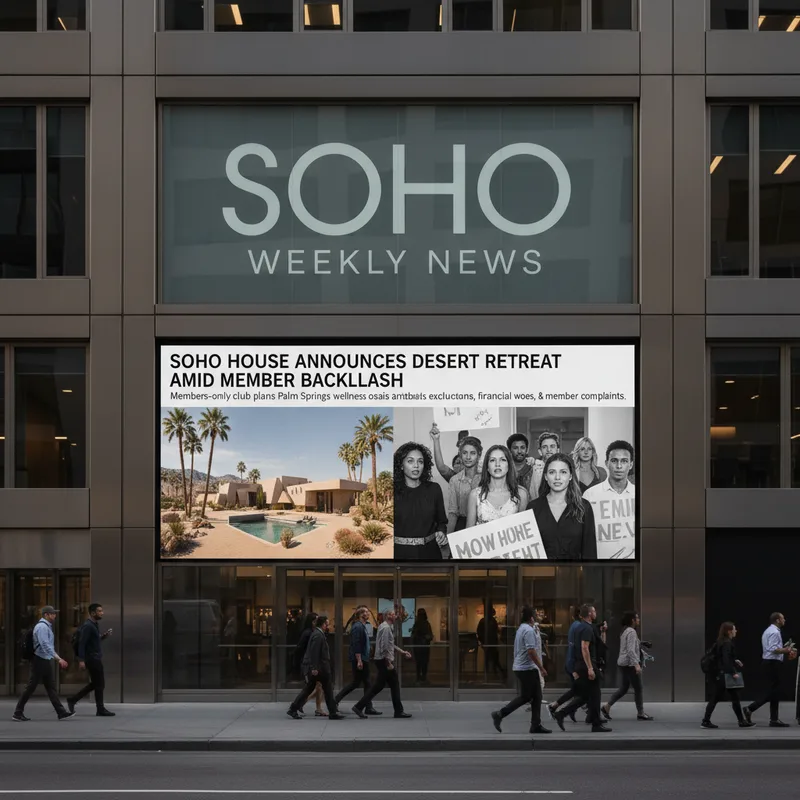
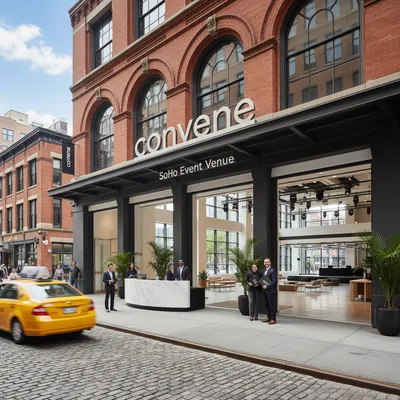
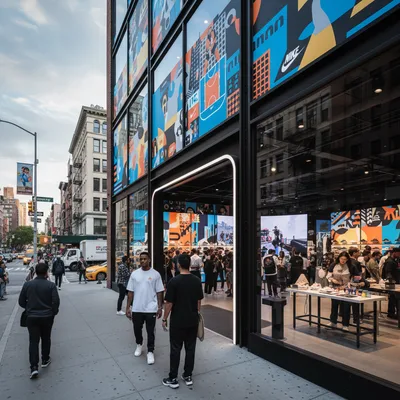
In a city like New York, where trendy pop-ups and exclusive venues are constantly emerging, the competition is particularly fierce. While Soho House offers a global network, the local scene in neighborhoods like SoHo itself thrives on unique, independent establishments, from high-end bars to luxury fitness clubs that offer a different kind of curated experience.
Financial headwinds and a private future
The brand's challenges are not just cultural but also financial. Since going public in 2021, parent company Membership Collective Group struggled to achieve consistent profitability. This financial turbulence culminated in a major corporate shift earlier this year, when the company was taken private again in a $2.7 billion deal.
In the wake of this overhaul, the company has begun taking drastic steps to address the criticism head-on. Reports emerged in late 2025 that Soho House was culling its membership, cutting hundreds of members in overcrowded cities like New York, Miami, and Los Angeles to “get back to its creative roots.” Some industry analysts view the announcement of far-off projects like the 2027 Palm Springs house as a strategic move to retain current members. By teasing a more exclusive and relaxing future, the company may hope to prevent West Coast members from canceling their pricey annual memberships out of frustration with the current state of the clubs. This mirrors trends seen in other property markets, for instance, where Sydney Metro lines fuel property price surge. It's a promise of returning to form, a tactic to maintain revenue streams while the company reorganizes itself behind the scenes.
Betting on a destination
The Palm Springs project represents a clear pivot in strategy. By creating a “wellness escape,” Soho House is tapping into the lucrative market for destination experiences. The focus on a sprawling, multi-acre retreat is a direct response to the complaints about urban overcrowding. It frames the brand not just as a city clubhouse but as a resort destination, offering a different value proposition to its members.
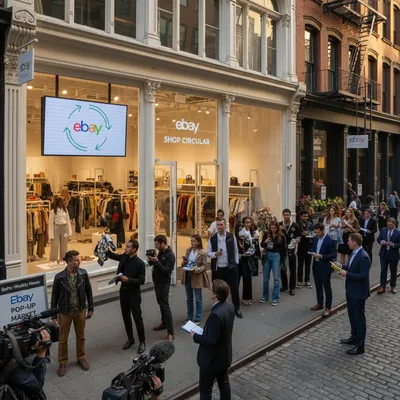
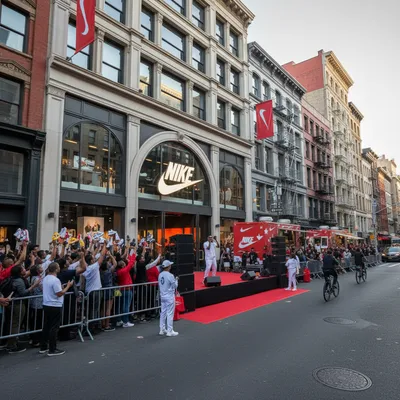
This move is reminiscent of how other brands in SoHo have used temporary, experience-focused events, like pop-ups, to generate buzz and reinforce their brand identity in a competitive marketplace. The success of the desert house will depend on whether it can deliver a genuinely elevated experience that feels distinct from the existing, crowded clubs.
Ultimately, Soho House is at a crossroads. It must find a way to balance its large-scale global operation with the boutique sense of belonging that originally made it famous. Whether a sun-drenched retreat in the Coachella Valley can solve the identity crisis of a brand born in a London townhouse remains to be seen. For now, the promise of a desert sanctuary is a forward-looking statement of intent, with its full realization still years away.